Blog
Nalanda Mahavihara - Ancient Buddhist University

Please log in to continue

Nalanda Mahavihara - Ancient Buddhist University
May 19, 2026


Nalanda Mahavihara - Ancient Buddhist University
Nalanda Mahavihara is one of the most important Buddhist heritage sites in India. Located in Bihar in north-eastern India, the archaeological site preserves the remains of a monastic and scholastic institution that dates from the 3rd century BCE to the 13th century CE. The complex includes stupas, shrines, viharas, and important works in stucco, stone, and metal. It is recognized as the most ancient university of the Indian Subcontinent, and its long history shows how Buddhist learning developed through centuries of organized teaching and monastic life. This is one of the top attractions in our Footsteps of the Buddha Tour - India and Nepal (7D6N) Tour!
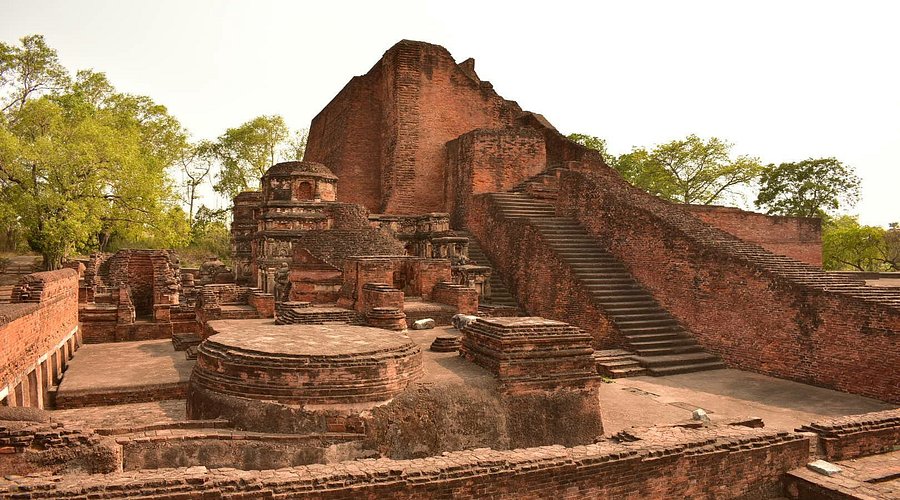
The site is spread across a large excavated area, and what remains today still shows the scale of the original institution. There are nine monastery sites and four temples, with a few shrines scattered around the complex and many structural remains visible in foundations and pillars. The ruins are not a single isolated monument but a whole educational and religious landscape, where the layout of monasteries, temples, and courtyards still makes the site easy to read as a former center of study and worship.
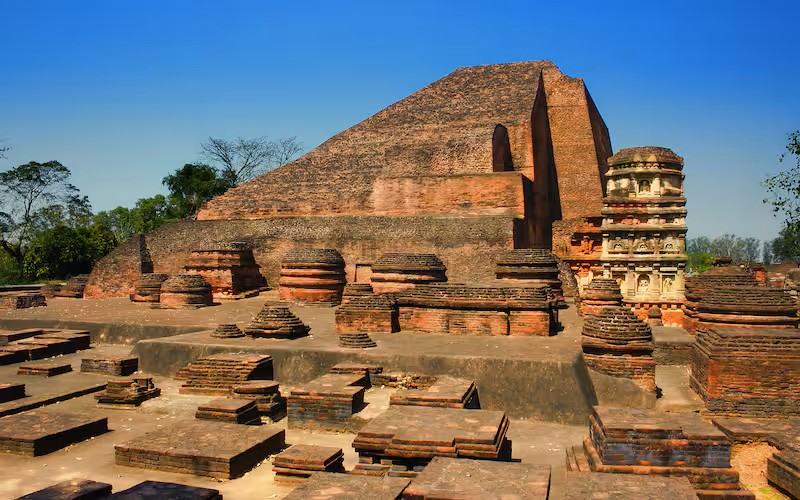
Nalanda became famous because it functioned as a place of organized knowledge transmission for 800 uninterrupted years. At its peak, it is remembered as a major center that hosted around 10,000 students and teachers. Buddhist studies were taught alongside logic, medicine, mathematics, astronomy, philosophy, and literature, which helps explain why Nalanda became known across Asia as a place of advanced scholarship rather than only a monastic site. The many scholars connected with Nalanda helped keep Buddhist thought alive and shaped several traditions that continued long after the university itself declined.
The history of the site also shows how widely Nalanda was connected to the Buddhist world. A Chinese traveler stayed there for almost ten years in the 7th century, and the site continued to receive support under the Pala dynasty, especially during the reigns associated with Dharmapala and Devapala. Later, the university was destroyed in 1200 CE, after which the site remained in ruins until survey and excavation work began much later. These layers of history make Nalanda one of the clearest places to see the rise, strength, decline, and rediscovery of Buddhist learning in India.
The modern archaeological story of Nalanda is also important. The site was surveyed in the 19th century, with Major Markham Kittoe linking the ruined remains to the famed university, and Alexander Cunningham carrying out the first official survey under the Archaeological Survey of India. Major excavation work followed between 1915 and 1937, and restoration work was carried out again from 1974 to 1982. The site was recognized as a UNESCO World Heritage Site in 2016, confirming its global importance as a center of Buddhist education and heritage.
What makes Nalanda especially valuable for a Buddhist tour is the way the ruins still communicate the structure of a great monastic university. The monastery blocks, temple remains, and open courtyards show how residential life and education were closely linked. Even in ruin form, the site still feels planned and ordered, which matches its original role as a place where monks lived, studied, debated, and practiced together. The open archaeological space in the footage fits that setting well, with visitors walking through broad paths, brick foundations, and temple remains that still define the site’s ancient layout.