
Blog
Wuxi Declaration - United Nations Day of Vesak 2026

Please log in to continue

Wuxi Declaration - United Nations Day of Vesak 2026
May 28, 2026


Wuxi Declaration - Vesak 2026
The 21st United Nations Day of Vesak 2026 in Wuxi closed with the adoption of the Wuxi Declaration, the final statement of the conference held from May 26 to 28 in Jiangsu, China. After three days of meetings, Buddhist leaders and delegates ended the gathering with a shared message focused on lasting peace, compassion, selflessness, ecological responsibility, and a common future for humanity. This conclusion gave the event a clear purpose beyond ceremony, linking Buddhist teaching with the practical challenges of the modern world. Check out our Footsteps of the Buddha Tour - India and Nepal (7 days/6 nights) here!
The declaration reflects the main ideas discussed throughout the conference. Its message calls for stronger foundations of peace, greater cooperation between people and nations, and a more careful relationship between humanity and nature. It also highlights the value of altruism, which is presented as an essential Buddhist response to conflict, division, and uncertainty. In this way, the Wuxi Declaration summarizes the spirit of the conference in a short but meaningful form.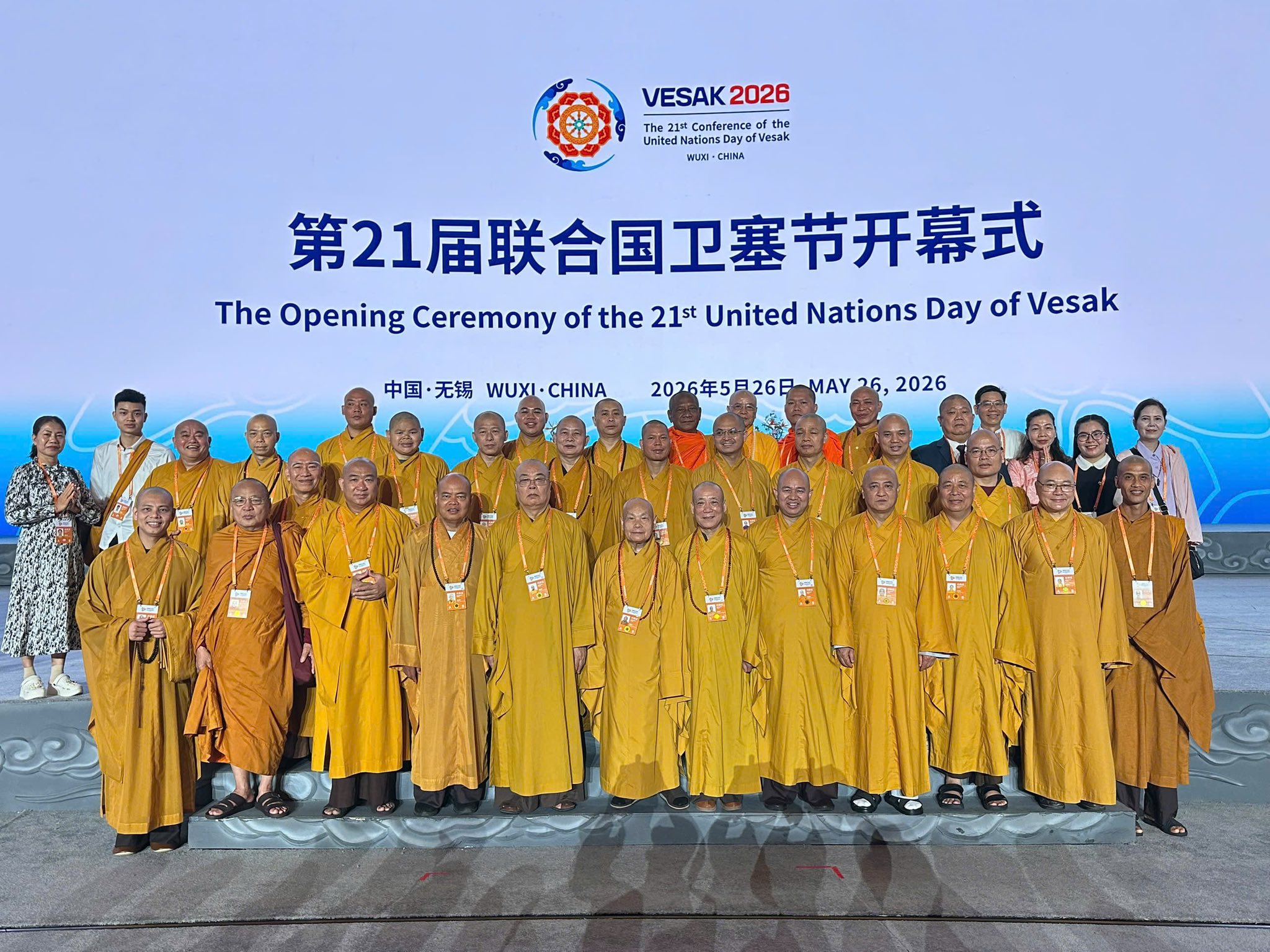
The final day of Vesak 2026 in Wuxi was not only a closing moment, but also a summary of the larger themes that shaped the event. Delegates had already taken part in opening ceremonies, academic sessions, and Buddhist exchanges, and the declaration brought those discussions together into one common message. The result was a statement that positioned Buddhist wisdom as a source of guidance for sustainable development, ethical action, and peaceful coexistence.
What stands out most about the Wuxi Declaration is its balance between spiritual values and global concerns. It does not remain at the level of theory alone. Instead, it speaks to issues such as human well-being, green development, and cooperation among communities. The final message of the conference therefore extends beyond the conference hall and points toward the wider role Buddhism can play in public life and international dialogue.


