
Blog
Ngoc Con Panorama: Cao Bang's Ultimate Visual Escape

Please log in to continue

Ngoc Con Panorama: Cao Bang's Ultimate Visual Escape
September 20, 2026


Ngoc Con Panorama: The Fairytale Frontier of Cao Bang
When mapping out a journey through Northeast Vietnam, the Ban Gioc route is typically associated with roaring waterfalls and heavy tourist traffic. However, if you follow the Quay Son River to the exact point where it enters Vietnamese territory from China, the geography dramatically shifts.
Here, sitting right against the border fence in Trung Khanh District, is Ngoc Con - a commune that stretches across 23 square kilometers of flat agricultural basins. It trades the rugged, intimidating limestone canyons for a serene, pastoral environment. For travelers looking to step away from the crowds and engage in authentic slow travel, Ngoc Con offers a rare look at rural border life.
To truly understand this landscape, you have to experience it from two very different perspectives: from the high peaks, and from the quiet earth.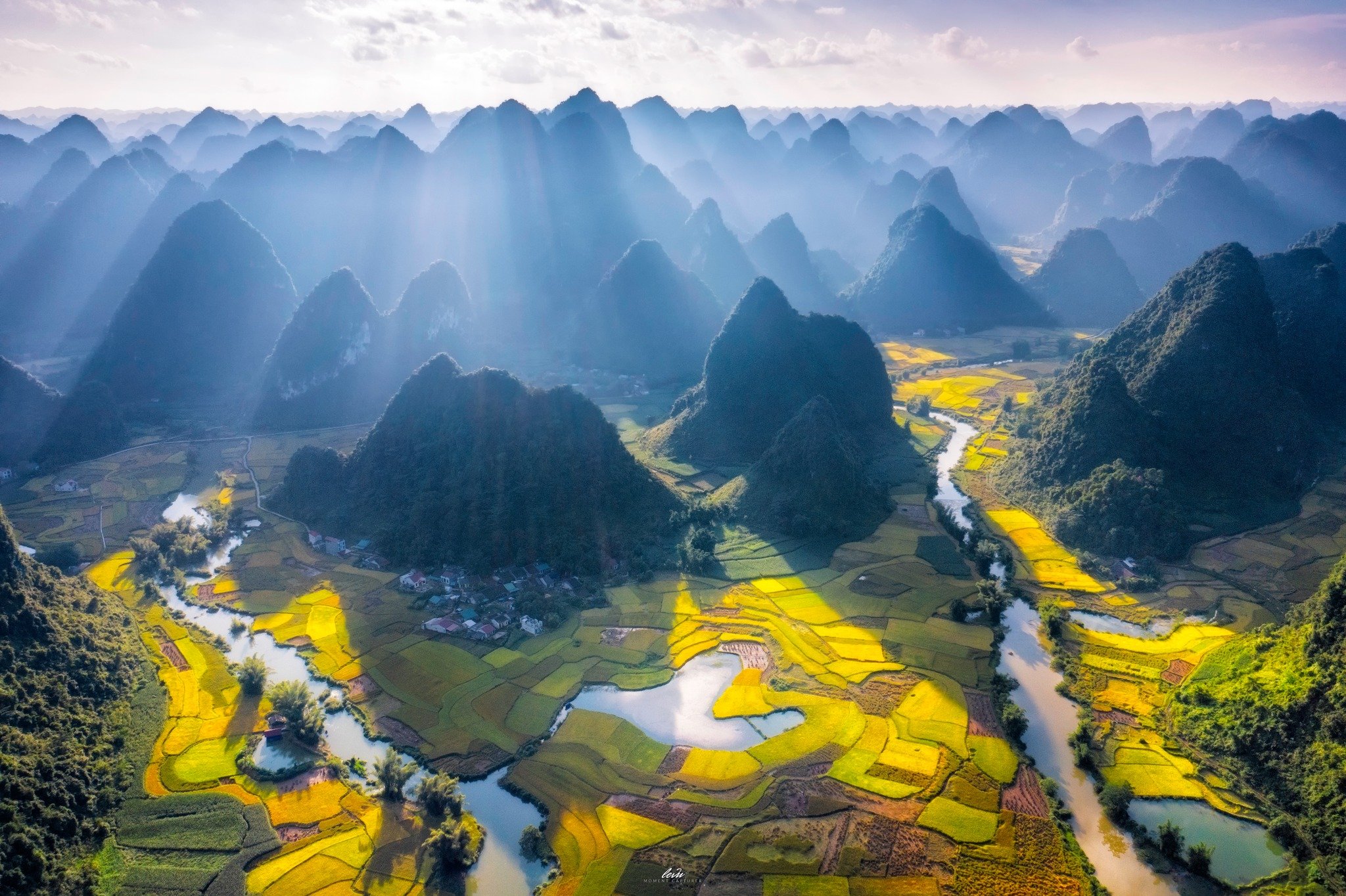
Earning the Panorama: The 20-Minute Climb
You cannot fully comprehend the scale of Ngoc Con from the main road. The true geography of the valley is only revealed from above, and reaching the best vantage point requires a short but demanding physical effort.
Local guides know of a specific, unmarked dirt trail that cuts up the side of a nearby hill. Hiking this steep path takes about 20 minutes. It requires sturdy shoes and a willingness to sweat, as the trail is raw and primarily used by locals navigating the brush. As you climb higher, the sounds of the working farms fade, replaced by the wind coming off the mountainous border.
The physical effort pays off the moment you clear the tree line. At the summit, the entire valley reveals itself in a sweeping, unobstructed panorama. From this vantage point, you watch the Quay Son River weave like a continuous jade ribbon through endless agricultural fields. The water acts as a mirror for the sky, cutting a bright, winding path through the dense grid of crops.
The basin is flanked by towering, sharp limestone pyramids acting as natural sentinels, with local names like Lung Qua, Po Dao, and Tom Deng. Looking down at the tiny, scattered roofs of the traditional stilt houses and the precise geometry of the farmland, the scenery looks less like a rugged frontier and more like a meticulously painted canvas. Standing on this peak offers one of the most rewarding and exclusive panoramic viewpoints in all of Cao Bang, providing a profound sense of isolation and scale.
The Living Canvas: Timing Your Visit
Ngoc Con is a working agricultural community, meaning the colors of the valley dictate the visual experience, and these colors change with the seasons.
If you arrive in late April or May, the fields are primarily planted with corn and local tobacco, creating a vibrant patchwork of bright green and yellow. By June, the locals harvest these crops and begin flooding the terraces to prepare for the rice season. The most striking transformation occurs between September and November. During this autumn window, the weather cools significantly, and the sprawling rice fields turn a brilliant, golden yellow. It is the peak season for landscape photography, offering the perfect contrast against the dark green mountains and the blue river.
Indigenous Border Culture and the Sacred Spring
The people working these fields belong almost entirely to the Tay and Nung ethnic groups, making up over 99 percent of the commune’s population. They maintain a traditional way of life that is completely authentic - they are farming for their livelihood, not for tourism.
As you explore the hamlets, you can observe their daily routines around traditional stilt houses. The locals also hold a deep reverence for the natural environment. Just a few hundred meters from the international border lies the Bo Hay spring. The water in this natural spring remains a vibrant jade-green year-round and rarely dries up, even in harsh conditions. The local community strictly protects it, viewing the constant flow of clean water as a sacred gift from nature.
The Taste of the Terroir: Cao Bang's "Nep Ong"
Connecting with the land in Ngoc Con also means tasting what it produces. The specific climate and fertile soil of this border valley yield one of Cao Bang's most prized culinary staples: Nep Ong (Ong sticky rice).
Known for its exceptionally large, round grains, this specific variety of rice is heavily sought after in the regional markets. When cooked, it becomes perfectly soft, chewy, and highly fragrant. Eating a warm serving of fresh Nep Ong grounds your travel experience directly in the local terroir.
Descending into Zen: Cycling and Outdoor Exploration
After taking in the panoramic views and understanding the cultural rhythm of the valley, the best way to experience Ngoc Con is by slowing down on the valley floor.
The winding paved roads that connect the seven local hamlets are virtually free of heavy traffic. Trading a car for a bicycle or an E-bike allows you to navigate the narrow paths that cut directly through the fields. Because the terrain is flat and the atmosphere is deeply quiet, the riverbanks have naturally evolved into a sanctuary for wellness and green tourism.
For travelers looking to actively unwind, this is an ideal setting to unroll a mat for a guided outdoor yoga session, practice mindfulness by the water, or set up a mobile coffee stop and a light picnic. There is no rush here; the experience is entirely about absorbing the silence of the landscape you just viewed from above.
Ngoc Con does not offer extreme sports or massive tourist complexes. It offers the rare luxury of absolute quiet and the slow, steady rhythm of rural life. To integrate this border panorama and its authentic agricultural experiences into a complete journey, explore our fully customizable 15D14N The North Vietnam Tour.


