
Blog
Dam Market Nha Trang - Local Food & Souvenirs

Please log in to continue

Dam Market Nha Trang - Local Food & Souvenirs
June 08, 2026


Dam Market is one of the most important city markets in Nha Trang and a place that shows the daily rhythm of local life very clearly. It sits in the central area of the city, on a swampy site connected to the mouth of the Cai River and under Ha Ra Bridge, which explains the market's long-standing name and its role as a key trading point in the center of town. The market opens every day from 5:00 a.m. to 6:30 p.m., so it works well as a daytime stop for travelers who want a busy but easy place to explore during a Nha Trang trip - a lively stop on our Vietnam Beach Paradise 8D7N Tour!
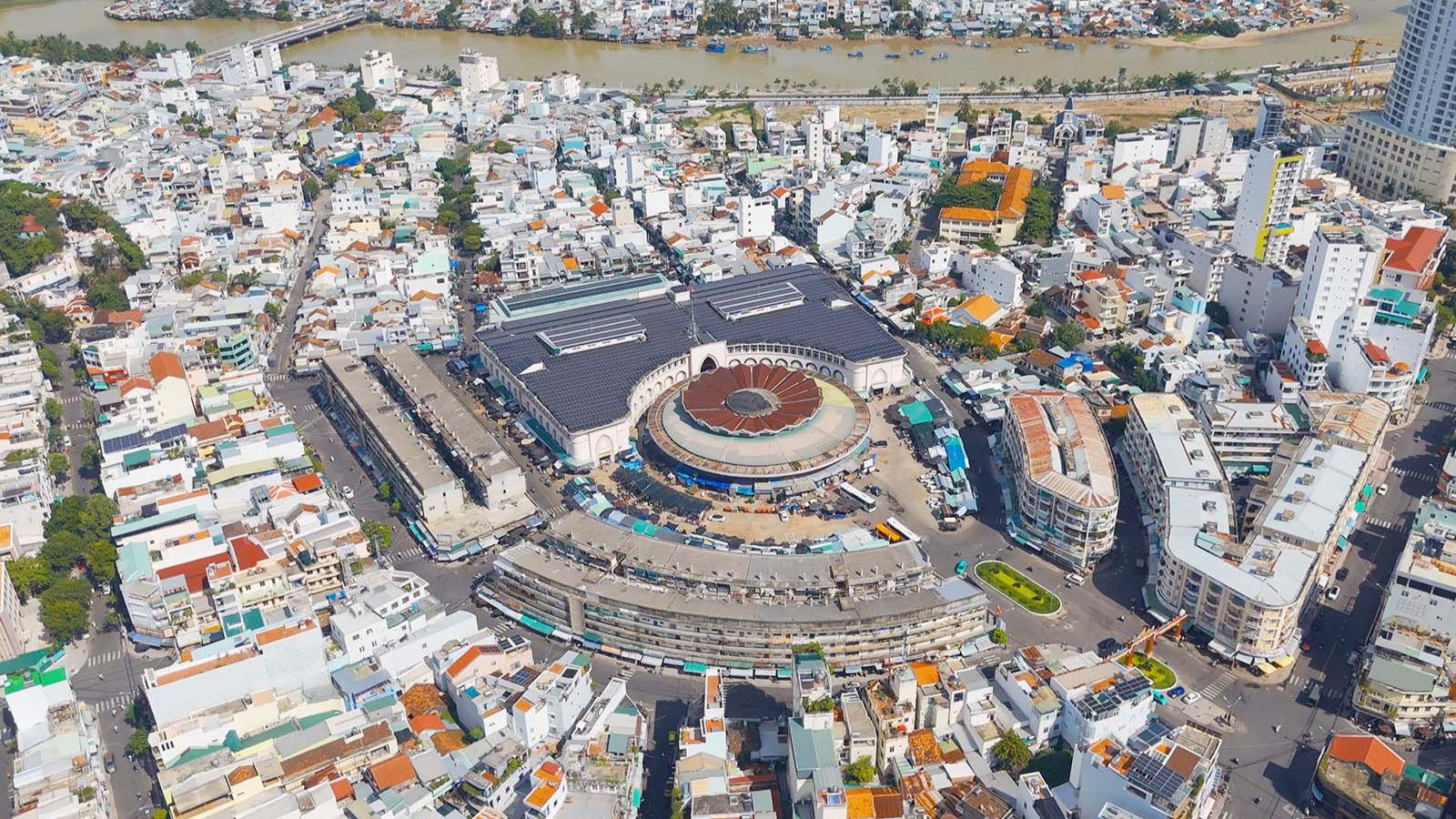
The market has a history that goes back to the early 1900s, when the location became a practical place for trade by both land and water. As the surrounding area grew more crowded, the market area needed to be rebuilt and reorganized. Reconstruction was finally prioritized after a fire in 1968 destroyed many homes nearby, and work on the rebuilt market began in 1969. Over time, the market has continued to change, including the addition of the arc-shaped section behind the original building, while city plans have also looked at adding more greenery and public features in the front area. That background gives Dam Market a place not only in shopping life, but also in the city’s development story.
One of the most recognizable parts of Dam Market is its lotus-inspired shape. The market was rebuilt in 1961 with a design that resembles a blooming lotus flower, and the round roof combined with the wing-like sides gives the building a strong visual identity in the middle of the city. The market area covers about 5,200 square meters and can hold up to 3,000 people, which helps explain why it remains such a busy and established commercial space. From above, the roofline stands out clearly, and the shape reflects a familiar Vietnamese cultural image in a modern market setting. For visitors who enjoy seeing architecture as part of a city experience, this is one of the first things that makes Dam Market memorable.
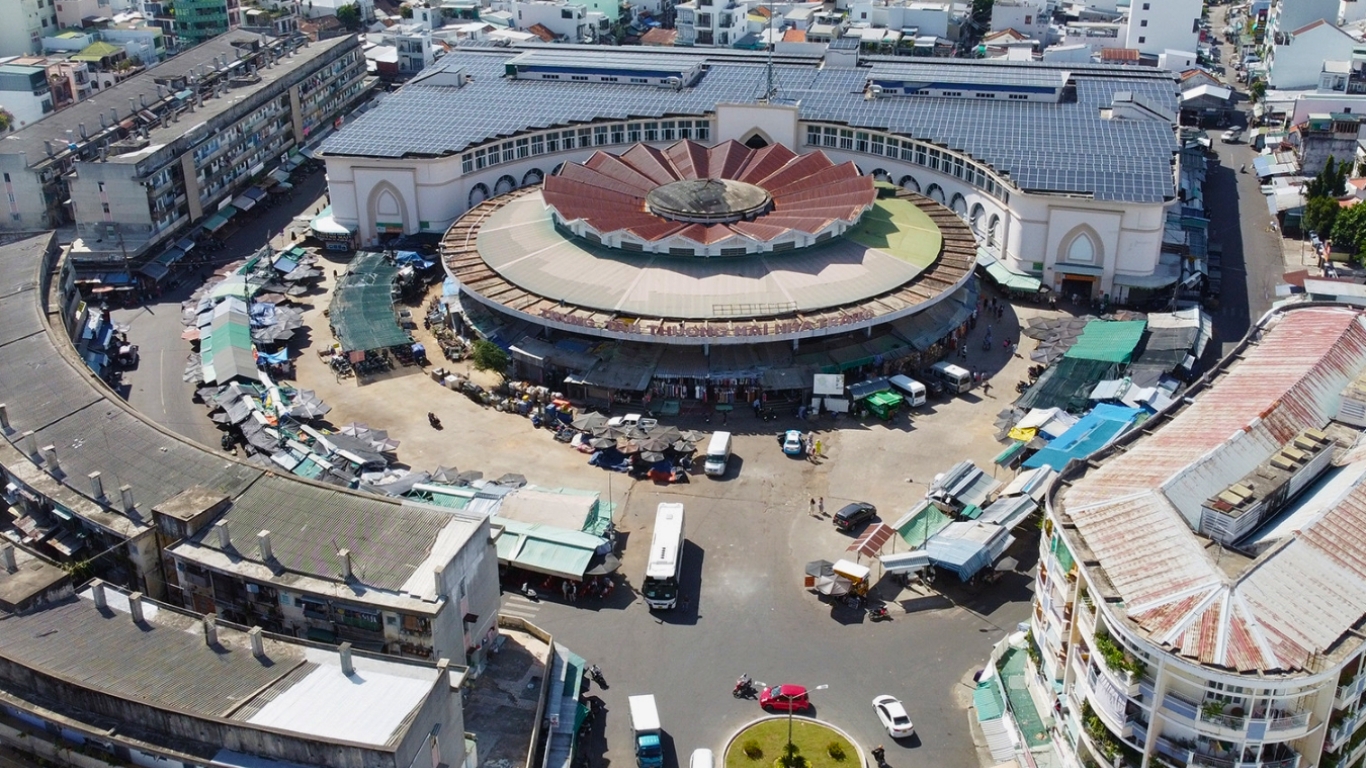
Inside, the market is divided into three main sections, and each one has its own character. The central area sells everyday items such as clothing, shoes, household goods, handicrafts, and souvenirs, including items made from coconut shells and seashells. The left wing is where the wet market is found, with fresh seafood and a busy wholesale atmosphere that serves restaurants and larger buyers. The right wing is where travelers can find many of Nha Trang’s local specialties, including mango rice paper, fish cakes, dried seafood, grilled pork rolls, and fish noodle soup. That structure makes the market easy to browse because each area has a clear purpose, and it gives visitors a quick look at both local shopping and local food in one place.
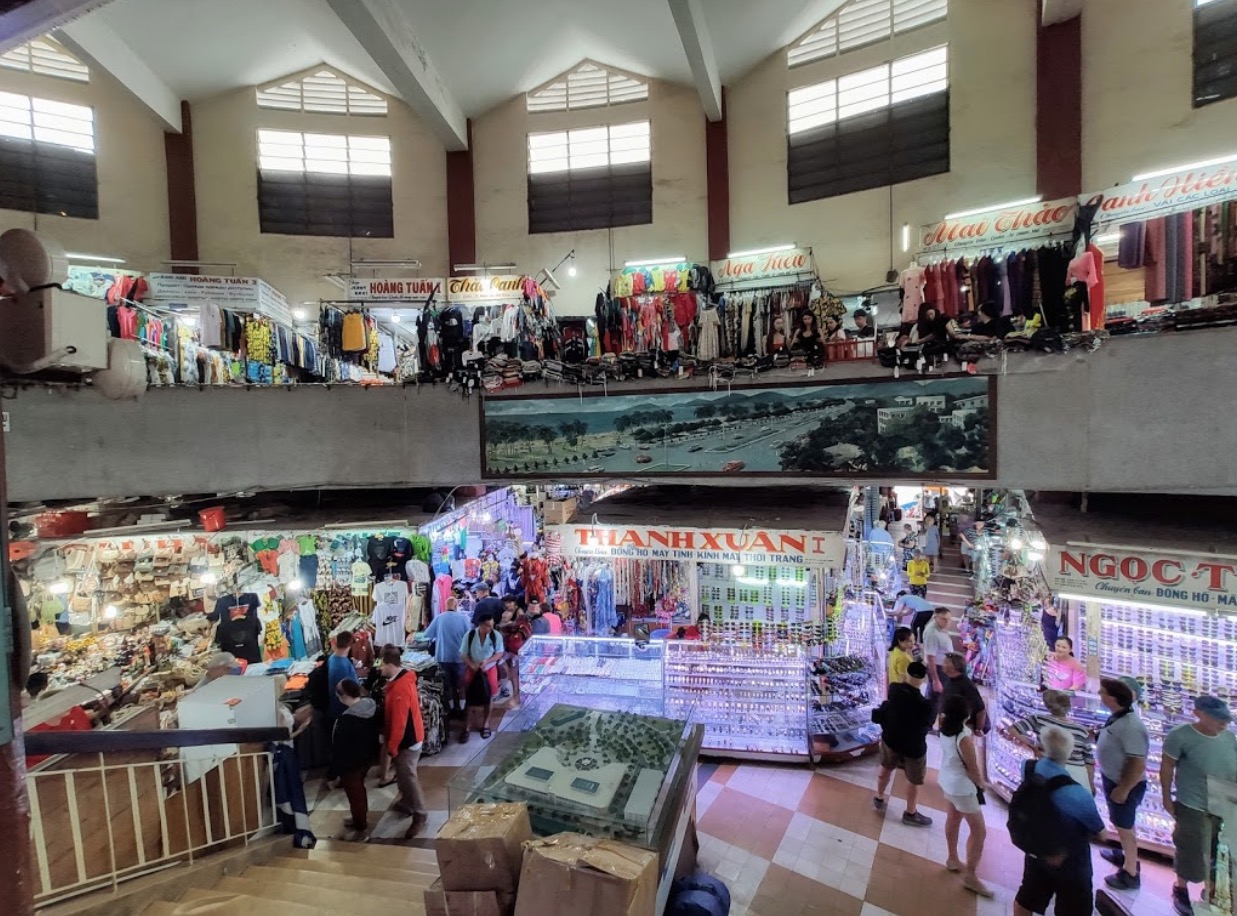
For travelers, Dam Market is not only about buying things, but also about the experience of being inside a classic Vietnamese market. The market guide recommends bargaining, especially because the area can be busy and prices may vary. It is also useful to visit in the morning if you want the freshest seafood and a more active market atmosphere. Carrying cash, keeping belongings close, and wearing comfortable shoes are practical tips for moving around the large market space. The market is also often described as a good place for photos because of its lively trading scenes, colorful goods, and architectural details. Compared with the night market, it is generally easier to browse and can feel a little less crowded, which makes it suitable for travelers who prefer a slower market visit.
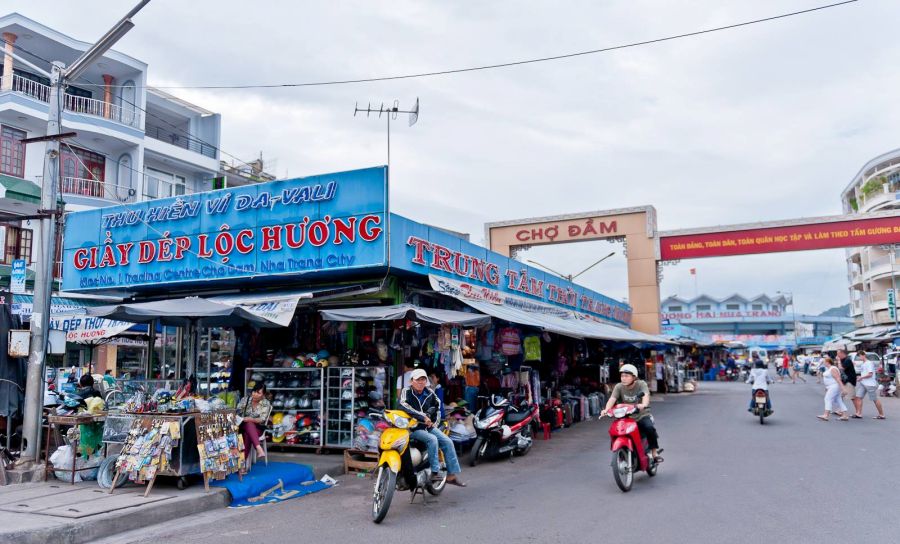
Dam Market is also easy to fit into a city sightseeing route. It is located about 500 meters from Nha Trang Beach and roughly 2 kilometers from the center of the city, which means it can be reached by walking, motorbike, bus, or taxi without much effort. That convenience is one reason the market remains such a common stop for both locals and visitors. It combines the shape of a landmark building, the pace of a working market, and the variety of local goods and food in one compact area. For anyone spending time in Nha Trang, it remains one of the city’s most useful places to see how shopping, food, and everyday trade come together.


